
Wanhua Polyurethane Windows & Doors
Glass-fibre reinforced polyurethane frames, no thermal break needed
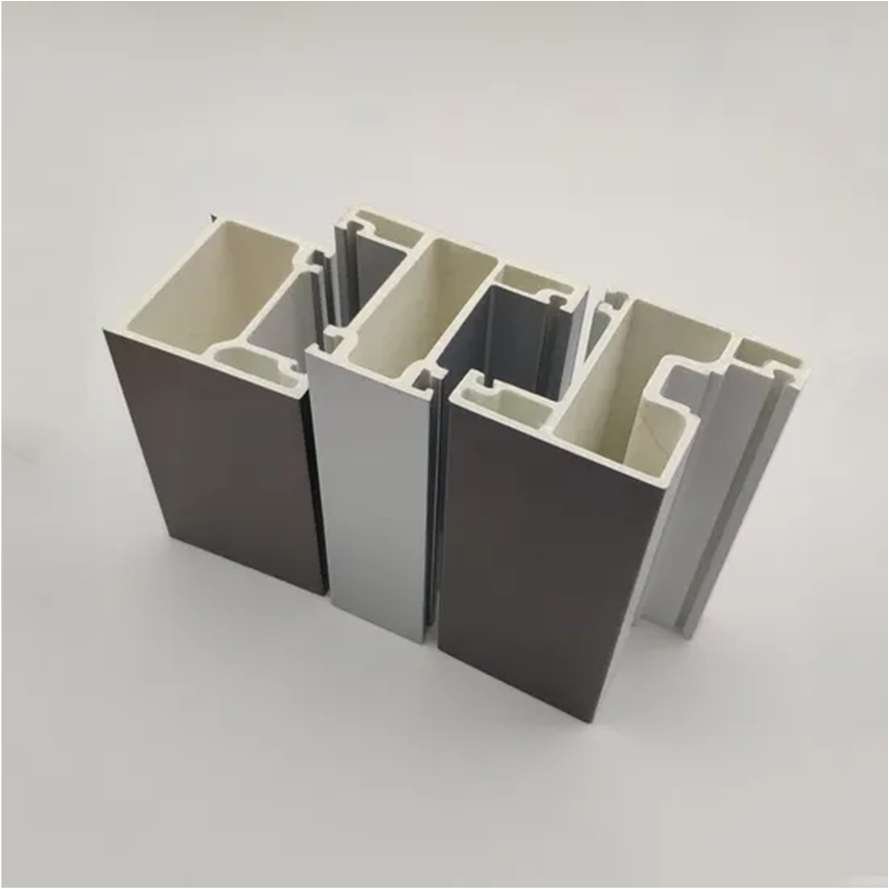
The frames are made from a composite profile: continuous glass fibre bound in polyurethane resin. It carries insulated glass without steel reinforcement, and it conducts far less heat than aluminium — so the profile does not need a separate thermal break.
In plain terms
A window frame made of fibreglass, not metal or plastic
Most Australian windows have aluminium frames; some use uPVC or timber. These windows use a fourth material — a glass-fibre composite, often just called fibreglass. The glass itself is ordinary double or triple glazing. What is different is the frame around it.
The frame is made by pultrusion: thousands of continuous glass fibres are pulled through polyurethane resin and then through a heated die, which sets them into the shape of the frame. It is the same process used for fibreglass ladder rails, and fibreglass window frames have been made this way in Canada and the United States for many years.
Most fibreglass frames overseas use polyester resin. These use polyurethane — the material Wanhua Chemical is built on. Polyurethane lets the profile carry a high proportion of glass fibre, which is where its stiffness comes from.
At a glance
- Glass-fibre reinforced polyurethane (GFRPU) frame profiles
- No thermal break and no steel reinforcement in the profile
- Low thermal expansion, close to that of concrete
- Profiles can be coated in a range of colours
- Double or triple glazing, depending on the series
Why the frame matters
Heat escapes through frames
The frame is a sizeable part of every window. Aluminium conducts heat very readily, so good aluminium windows need a plastic thermal break to slow heat through the frame. A glass-fibre composite conducts little heat to begin with.
Cold frames collect condensation
In winter, moisture in the air condenses on any inside surface that is colder than the dew point — often the frame of an aluminium window. A frame that conducts less heat stays closer to room temperature on its inside face.
Frames move with temperature
Every frame expands in the heat and shrinks in the cold. PVC moves a lot, aluminium less, and this composite very little — close to glass and concrete. Less movement means less strain on the seals and on the joint to the wall.
Energy targets for new homes rose under NCC 2022 — in NSW, BASIX tightened its thermal comfort targets in October 2023 — which puts more weight on how windows perform.
How the frame behaves in fire
Glass fibre does not burn
Most of the profile is glass fibre, an inorganic material that does not burn and withstands high temperatures.
No melting, no dripping
The polyurethane that binds the fibres is a thermoset: once cured it does not soften back into a liquid. In a fire it does not melt or drip. Its surface chars instead, and the char layer slows the fire's progress into the profile.
Fire-resistant configurations
Paired with fire-resistant glass, the system can be supplied in fire-resistant configurations. The manufacturer rates their fire integrity at 0.5 to 1.5 hours, depending on the glass. This is the manufacturer's rating, not an Australian fire-resistance level (FRL).
Fire-resistance levels and bushfire (BAL) ratings in Australia are established by testing to Australian Standards. Testing for these windows is in progress.
How frame materials compare
| Frame | Heat through the frame | Stiffness | Movement with temperature |
|---|---|---|---|
| Aluminium | High — needs a thermal break | High | Moderate |
| uPVC | Low | Low — larger sizes often need steel inside | High |
| Timber | Low | Moderate | Low, but moves with moisture |
| Glass-fibre polyurethane | Low | High — no steel needed | Very low |
A general comparison of the materials. Real windows vary with the design of each profile and the glass.
Material data
The frame material, compared
| Property | Aluminium | PVC | GFRPU |
|---|---|---|---|
| Density g/cm³ | 2.79 | 1.5 | 2.1 |
| Thermal conductivity W/m·K | 160 | 0.35 | 0.34 |
| Bending strength MPa | 250 | 30 | ≥ 1200 |
| Thermal expansion 10⁻⁵/K | 2.2–2.4 | 5–8.5 | 0.5–0.8 |
Testing of the window systems to AS 2047 is in progress. Performance figures for complete windows are available on request and will be published here once testing is complete.
In the factory
Two demonstrations of the profile
Bending: five people — over 360 kg in total — stand on a length of profile supported only at its ends. It bends under them and returns to its original shape when they step off.
Alkali: a piece of the composite profile and a piece of aluminium are placed in 10% sodium hydroxide solution. The aluminium reacts and breaks down; the composite comes out intact.
The range
Windows and doors
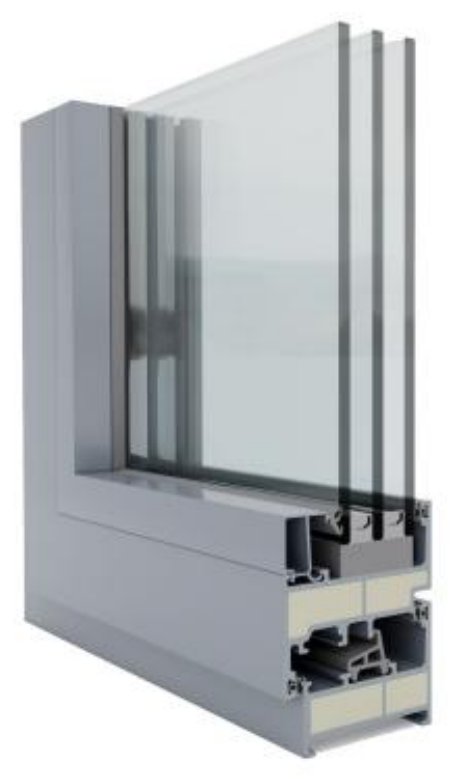
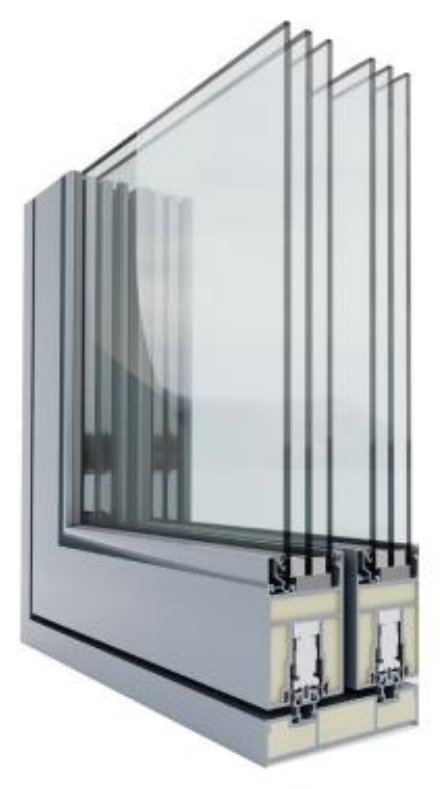
Four types across two profile series. Quote the series and type when enquiring.
70 Series
Fixed window
Double or triple glazed
70 Series
Awning window
Double or triple glazed
70 Series
Casement window
Double or triple glazed
142 Series
Lift-and-slide door
Double or triple glazed
Profile sections
Where it fits
Low-energy homes
A frame that conducts little heat, paired with double or triple glazing.
Modular and prefabricated housing
Windows can be fitted in the factory, with consistent quality control.
Coastal projects
A composite profile rather than a metal one, with stable dimensions.
Larger openings
A stiff profile allows larger fixed and opening sashes.
Common questions
- Is it plastic?
- No. It is a composite — a high proportion of glass fibre bound in polyurethane resin — so it behaves as a structural material rather than like a PVC frame.
- What does it look like?
- Much like a painted or powder-coated frame. The profiles can be coated in a range of colours.
- What glass does it take?
- Double or triple glazing, depending on the series, typically with Low-E glass and argon-filled cavities.
- Does it suit prefabricated construction?
- Its low movement with temperature suits walls built in a factory, and the windows can be fitted before the walls leave it. Ask us about details for Wanhua SIPs walls.